
Bug Essentials
Learn key defect concepts—bug definitions, causes, and why early detection is cost-effective.
What Defines a Software Bug?
When working in software development or testing, understanding the root causes of software bugs is crucial. I’ve broken down five key conditions that can lead to a bug, summarized in the mind map below:
1️. Fails to perform a required function.
2️. Performs something it shouldn't.
3️. Exhibits unmentioned behavior.
4️. Omits a function that should be included.
5️. Is difficult to use, understand, or just feels "not right" to the end user.
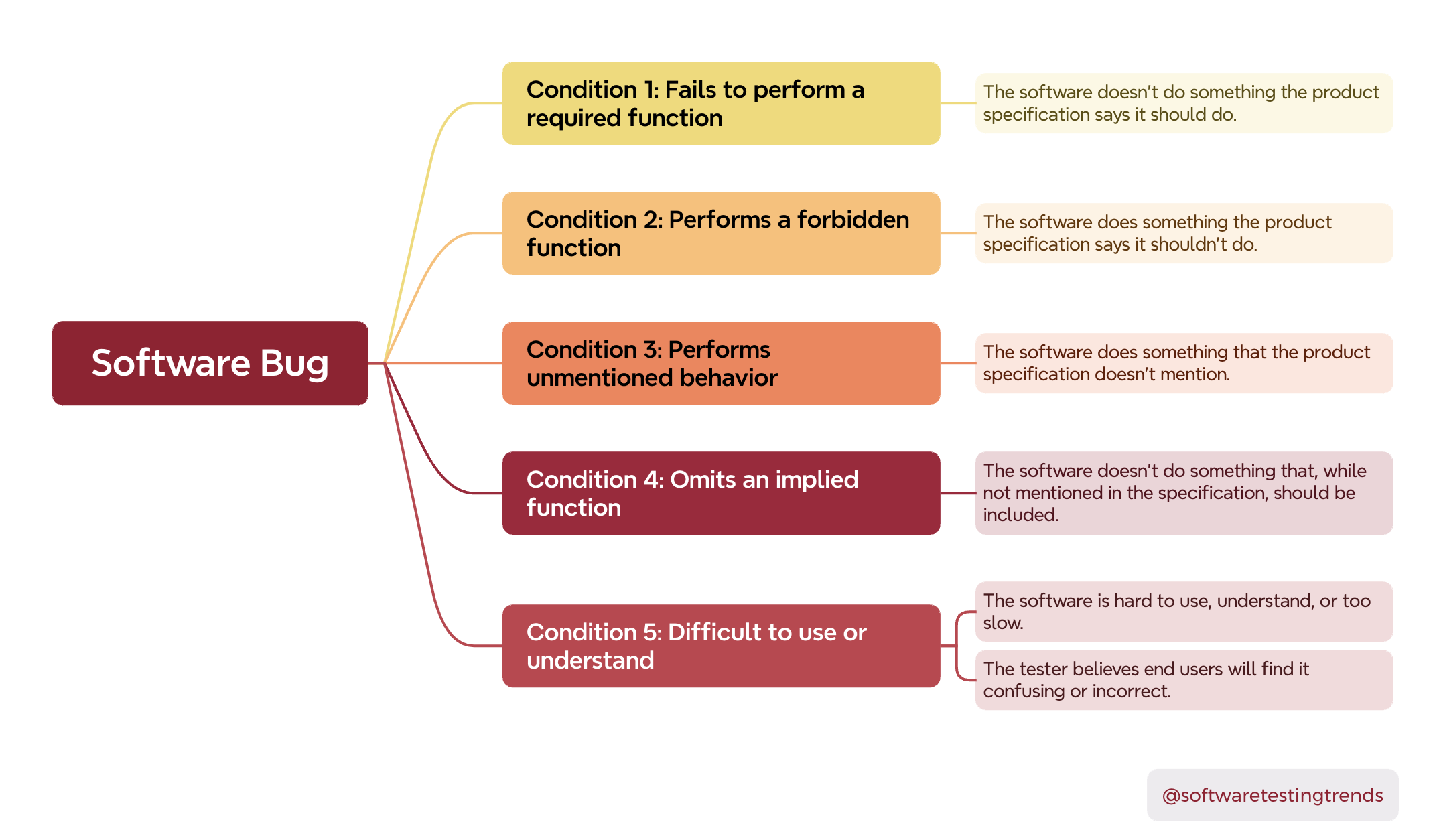
Whether you're a tester, developer, or product manager, keeping these in mind can help enhance product quality and user satisfaction!
The Rising Cost of Bugs
As developers, we all know that bugs can be a costly problem. But did you know the cost to fix them increases exponentially as we move through different phases of the development lifecycle?
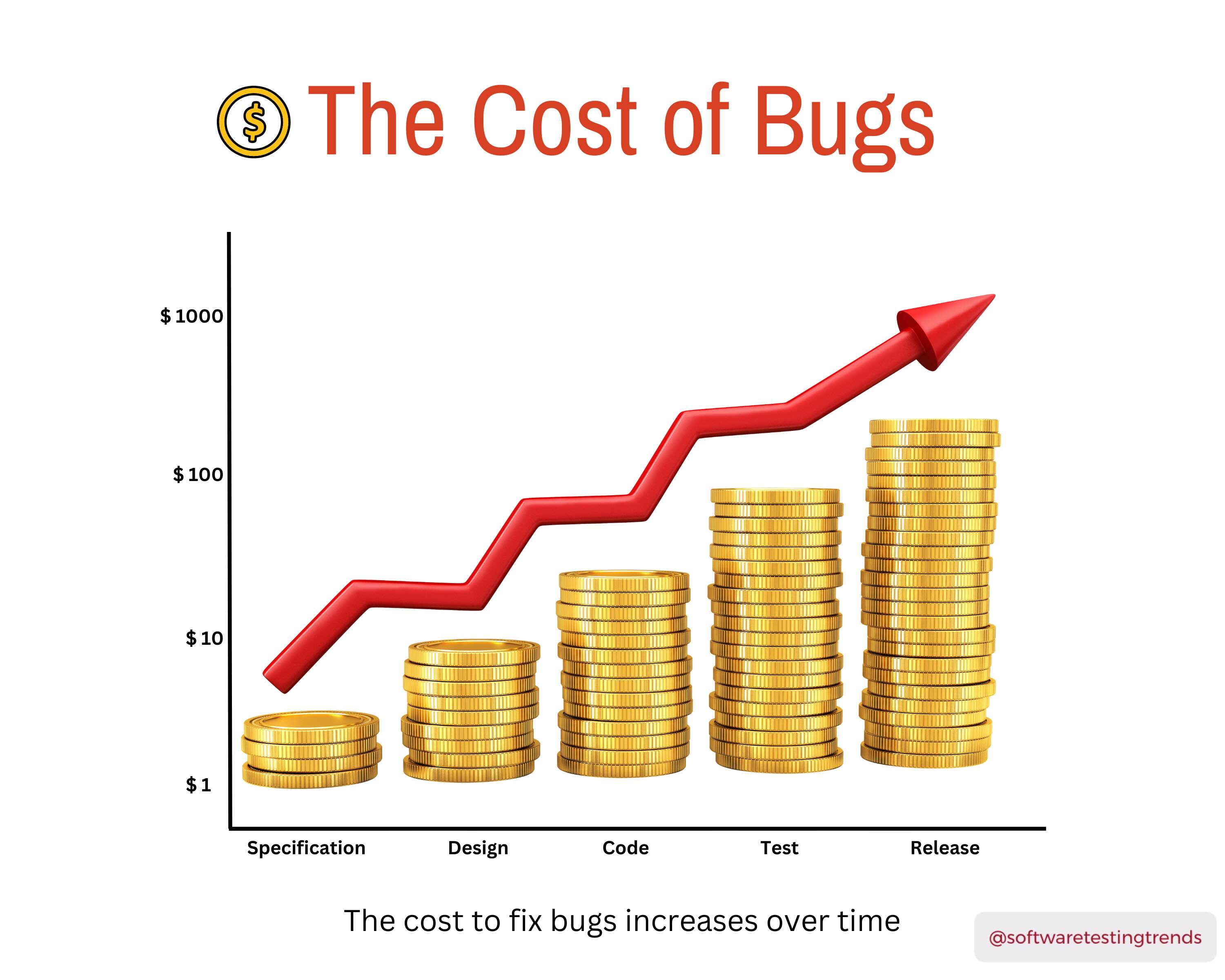
The earlier a bug is caught — during the specification or design phase — the cheaper and easier it is to fix. But once we hit the release phase, that same bug can cost much more to resolve!
This highlights the importance of:
- Thorough planning and design
- Regular code reviews and testing
- Early and continuous testing throughout development
By catching issues early, we not only save money but also improve the quality and reliability of the product!💡
Main Causes of Bugs in Software Development
This mindmap breaks down the key causes of bugs that many of us encounter during software development. It covers everything from requirements issues to integration problems and human factors.
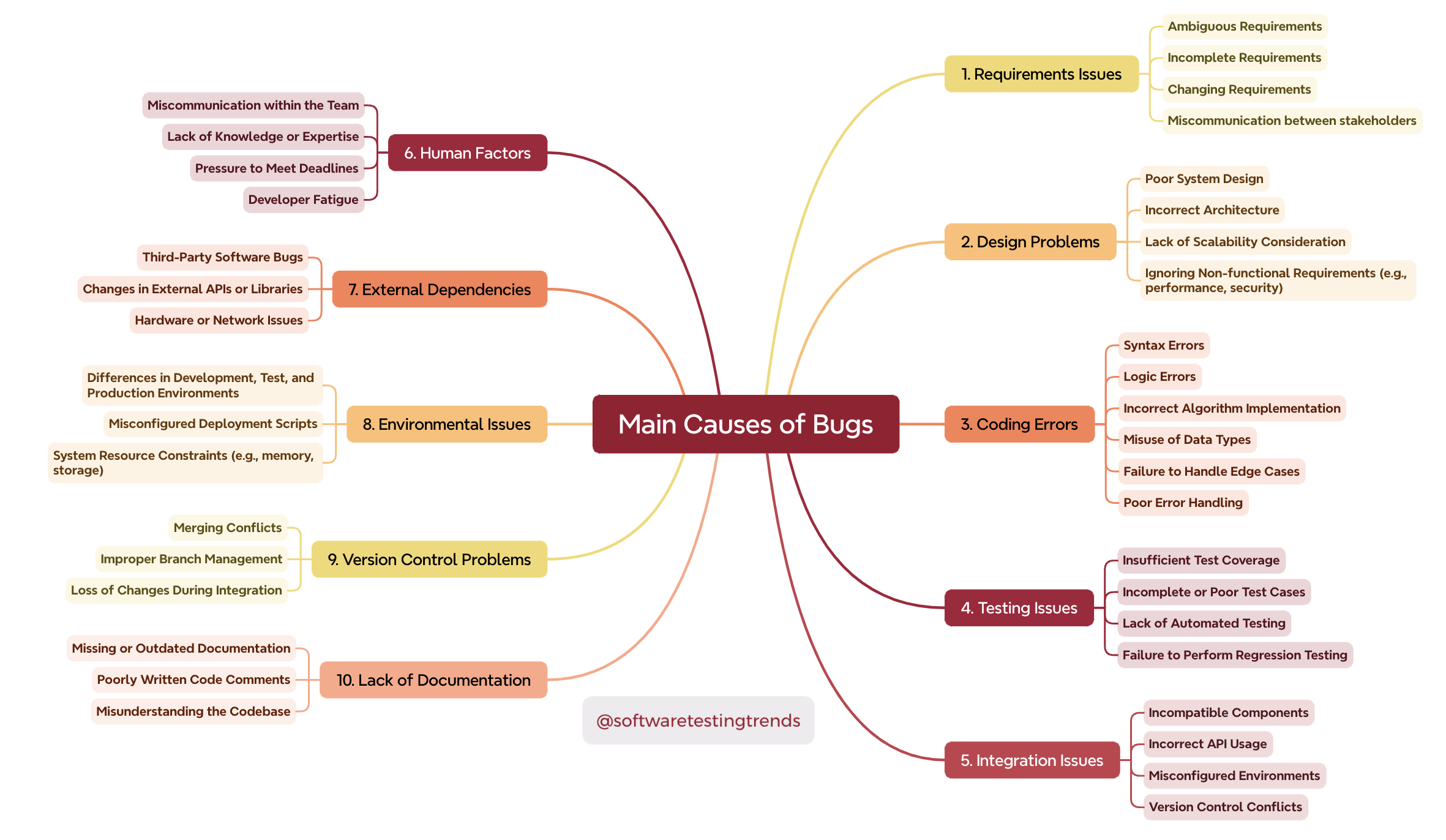
The key takeaway? Bugs don’t just happen because of bad code — they can stem from unclear requirements, poor design, and even external dependencies. This is why addressing bugs early and focusing on prevention is so important for delivering high-quality software.
By understanding the root causes, we can:
- Improve our processes
- Minimize rework
- Deliver better products to our users
Remember, the cost of fixing a bug rises dramatically the later it's found. Let's all strive for early detection and continuous improvement!
Defect Life Cycle (DLC)
Understanding how defects are managed throughout their lifecycle:
- New - Defect discovered and reported
- Assigned - Assigned to developer for investigation
- Open - Developer confirms and begins work
- Fixed - Developer implements solution
- Retest - Tester verifies the fix
- Verified - Fix confirmed working correctly
- Closed - Defect resolution completed
Alternative States:
- Rejected - Not a valid defect
- Duplicate - Already reported elsewhere
- Deferred - To be fixed in future release
- Reopened - Issue persists after attempted fix